


When Is an Irregular Period a Reason to See a Gynecologist?
Menstrual cycles are not exactly the same for every woman. The timing, duration, and flow of a period can vary between individuals and may change at different stages of life. However, significant or persistent changes in your menstrual pattern may be worth discussing with a healthcare professional. An irregular period does not automatically mean something is wrong.
But understanding why your cycle has changed can help you receive appropriate care when necessary.
What Is an Irregular Period?
An irregular period generally refers to menstrual cycles that are unusually inconsistent or significantly different from your usual pattern. This may include:
- Periods occurring much earlier or later than expected
- Frequently missed periods
- Very heavy menstrual bleeding
- Very light bleeding that is unusual for you
- Bleeding between periods
- Periods lasting unusually long
- Significant changes in your usual cycle pattern
The important thing is to understand what is normal for you and recognize persistent changes.
What Can Cause Irregular Periods?
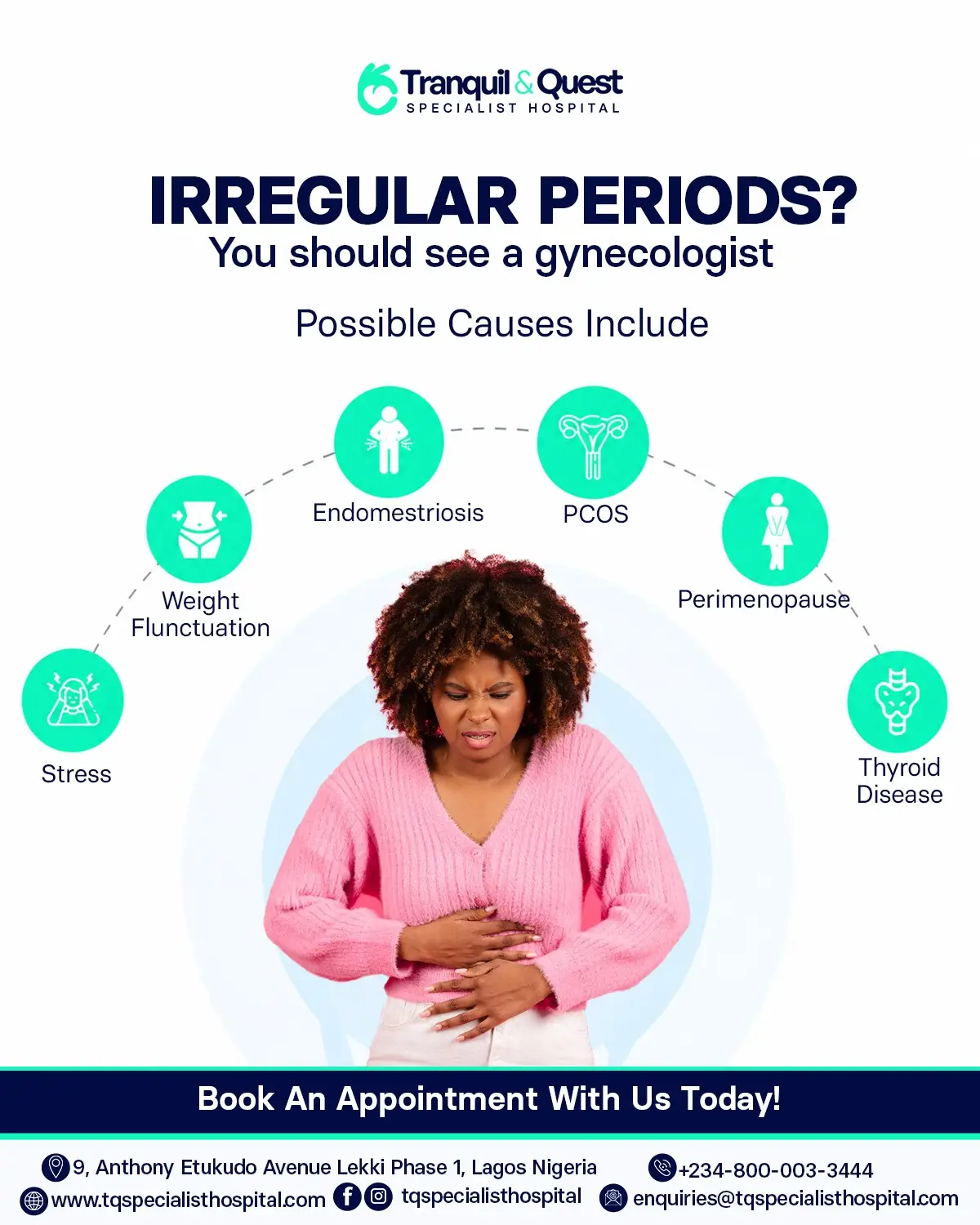
There are many possible causes. Hormonal changes can affect menstruation, particularly during adolescence, after pregnancy, around menopause, or when certain medications or contraceptive methods are being used. Other possible factors include:
- Pregnancy
- Significant weight changes
- Excessive physical activity
- Stress
- Polycystic ovary syndrome (PCOS)
- Thyroid disorders
- Uterine fibroids
- Endometriosis
- Certain medications
- Other reproductive or hormonal conditions
Because the causes vary, don’t assume every irregular period has the same explanation.
When Should You See a Gynecologist?
Consider speaking with a gynecologist when menstrual changes are persistent, significant, or concerning. Seek medical evaluation if you experience unusually heavy bleeding, severe pain, repeated missed periods, bleeding between periods, or a sudden and persistent change in your cycle. If pregnancy is possible and your period is unexpectedly missed, pregnancy testing may also be appropriate.
Severe Pain Should Not Always Be Considered Normal
Many women grow up believing that severe menstrual pain is simply something they have to endure. While menstrual discomfort can be common, severe or worsening pain that interferes with school, work, relationships, sleep, or daily activities deserves attention.
Conditions such as endometriosis, fibroids, or other gynecological problems can sometimes cause significant pain. A proper evaluation can help determine the cause.
Keep Track of Your Menstrual Cycle
Tracking your period can make it easier to identify changes. You can record:
- The first day of each period
- How long bleeding lasts
- Flow intensity
- Pain levels
- Spotting between periods
- Other symptoms
This information can be useful when speaking with your gynecologist.
Do Not Diagnose Yourself
It can be tempting to search online and assume that a change in your period means you have a particular condition. However, many gynecological conditions share similar symptoms.
A healthcare professional can take your history, perform an appropriate examination, and recommend investigations where necessary.
Take Your Menstrual Health Seriously
Your period is more than a monthly inconvenience. Changes in menstruation can sometimes provide clues about reproductive or general health. If something feels significantly different from your usual pattern, do not ignore it.
At TQSH Women’s Center, we provide women-centered gynecological and reproductive health services designed to help women understand, protect, and manage their health at every stage of life.